
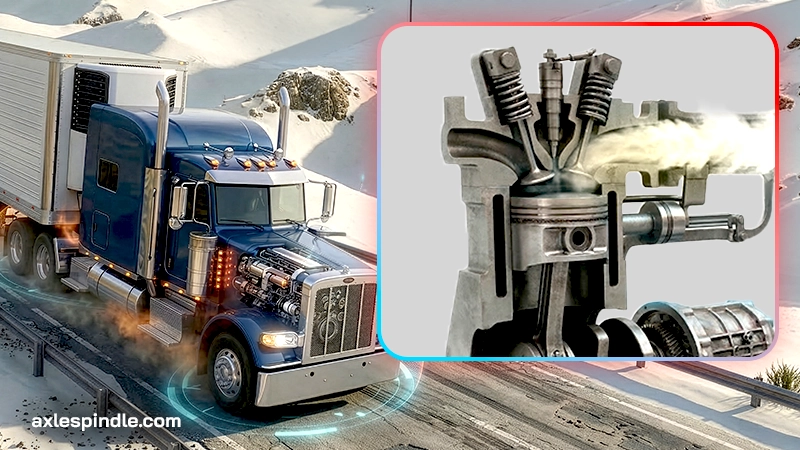
If you have ever stood by a highway and heard a loud, machine-gun-like rattling sound coming from a passing semi truck, it’s the truck’s engine brake coming to play.
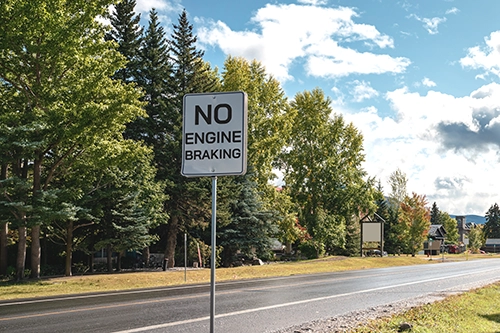
This harsh metallic sound is the reason for the “No Engine Braking” signs in many residential areas and noise-sensitive areas. But out on the highway, especially on long downhill stretches, truckers rely on it heavily. It is simply much safer than riding the wheel brakes all the way down.
The question is, how does an engine brake work in trucks, and why is it so important for safety?
Medium- and heavy-duty trucks use engine brakes, typically known as “Jake Brakes,” to slow the vehicle on steep grades without using the regular brakes. Slowing down the rig with an engine brake doesn’t create friction, so the foot (service) brakes don’t overheat. This technique not only prevents brake fade but also helps truck owners maintain vehicle stability while carrying heavy loads.
In this article, we will break down the science behind engine braking in trucks, dissect what Jake brakes are, and discuss the safety concerns associated with them.
How Does Engine Braking Work in Trucks? – A Quick Glance
- The engine creates natural resistance to help slow the truck.
- An engine brake increases that resistance for stronger, faster deceleration.
- Using engine braking reduces strain on foot brakes and extends their lifespan.
What is Engine Braking?
Simply put, engine braking in trucks and semi-trucks is using the engine itself to slow a vehicle rather than relying solely on the traditional “service brakes.”
Gas Vs. Diesel Engine System in Trucks
When you drive a truck and take your foot off the gas pedal while staying in gear, your vehicle naturally slows. This is engine braking. In gas-powered trucks, this happens because the throttle body closes, creating a vacuum in the engine that makes it harder for the pistons to move.
In other words, you are essentially using the engine as an air pump, trying to pull air through a closed straw.
On the other hand, diesel engines do not rely on the throttle for braking, so they experience very little natural resistance when slowing down. Unlike gasoline engines, there is nothing to restrict airflow and create braking force. On a steep hill with a heavy load, that small amount of resistance is not enough to keep the truck under control. Without a supplemental braking system, gravity takes over, and the truck accelerates.
This is why heavy trucks need a special mechanism called a compression-release brake, or Jake brake.
Why are Engine Brakes Called Jake Brakes?
“Jake Brake” is slang that comes from the Jacobs Vehicle System, which first produced the device in the 1960s. Nowadays, it is technically known as a “compression-release engine brake,” converting a diesel engine into a power-absorbing air compressor.
How Does a Jake Brake Work on a Semi Truck?
When the Jake brake is on, the engine stops burning fuel and becomes your braking system. It slows the truck down on its own, so your wheel brakes don’t have to do all the work. Here’s what happens, technically:
1. Air Gets Compressed
When the Jacobs Engine Brake (Jake Brake) is activated, and the driver releases the accelerator, the engine stops injecting fuel. As the pistons move upward, they compress air. The energy needed to compress this air is “stolen” from the truck’s forward motion, creating immediate resistance.
2. Compressed Air is Released
Just before the piston reaches TDC (Top Dead Center), the Jacobs Engine Brake system opens the exhaust valves. This releases the highly compressed air into the exhaust system instead of allowing it to push the piston back down.
3. The Pop (You Hear that Thundering Sound)
All that pressurized air blasts out through the exhaust at once, which is exactly where that loud thundering sound comes from. Since the engine isn’t providing any “push” to the piston, the wheels’ momentum has to force the piston down manually. Instead of the engine helping the wheels turn, the wheels are now struggling to drag the engine through its next rotation.
Safety Note:
A Jake Brake is a slowing device, not a stopping device. Drivers must still use the service brakes to come to a full stop. It should be avoided on icy or slippery roads, as slowing only the drive wheels can cause a loss of traction or a jackknife.
Jake Brake vs Exhaust Brake: What is the Difference?
Both systems help slow down a heavy truck without relying on wheel brakes, but they work differently.
A Jake brake turns the engine into an air compressor, releasing highly compressed air. It’s powerful, and it’s loud.
An exhaust brake, however, restricts exhaust flow, creating back pressure that resists piston movement during the exhaust stroke, which slows the truck. It is quieter than a compression-release (Jake) brake and is more common on light- to medium-duty trucks.
| Feature | Jake Brakes | Exhaust Brakes |
| How it Works | Releases compressed air from the cylinders, using that lost energy to slow the engine | Squeezes the exhaust flow to create resistance, making the engine work against itself |
| Braking Power | Delivers 300 to 600 HP of braking force, roughly matching the engine’s rated output | Generates around 100 to 200 HP of retarding force, typically 20 to 30% of the engine’s rated horsepower |
| Sound Level | Loud, popping sound | Much quieter |
| Suitable For | Heavy-duty semi-trucks | Small diesel trucks with lighter loads |
Why are Engine Brakes a Trucker’s Best Friend?
A truck’s engine or a Jake brake comes to the rescue when a trucker is driving steep downhill grades. It is every trucker’s companion because it prevents brake fade and helps control the wheels at high speeds and with heavy loads.
Main reasons why engine brakes work the best going downhill:
1. Prevents Brake Fade
Engine braking in trucks is one of the most effective ways to manage heat and keep foot brakes healthy on long descents.
- A loaded semi truck can weigh up to 80,000 pounds.
- Too much load puts enormous stress on the wheel brakes when going downhill.
- The result? Prolonged braking leads to extreme heat buildup in the drums and linings, which reduces friction and causes brake fade.
- Engine braking helps prevent wheel brakes from overheating and ensures they’re ready when needed most.
2. Cuts Down on Brake Repairs and Maintenance Costs
Using engine braking in a truck also saves repair costs over time.
- Engine braking reduces the need for continuous use of the service brake.
- Less strain on your service brakes means your brake and suspension hardware lasts significantly longer.
- When engine braking is active, and the truck remains in gear, most modern fuel-injected vehicles burn no fuel. The engine acts as a natural retarder. Older mechanically injected engines may still deliver a small amount of fuel during this process.
- Over time, this adds up to real savings on fuel and maintenance costs.
3. Stops Wheel-End or Axle Spindle Damage Before it Spreads
When brake fade sets in, the consequences do not stop at the brakes. The heat and stress can spread to other critical wheel-end components.
- Overheated brakes transfer heat to the axle housing and wheel end components.
- This can cause seals to fail, grease to break down, and bearings to wear out prematurely.
- Along with brake pads, the cost of replacing axle spindles and wheel-end components can also arise.
- Engine braking in trucks reduces this cascading effect of spindle failure or hub damage by keeping the entire braking system cooler and under less strain.
When is Engine Braking Prohibited?
Knowing when to hold off on the Jake brake is just as essential as knowing when to use it. Here are a few conditions where engine braking can do more harm than good.
1. Icy and Slippery Road Conditions
Engine braking on icy, wet roads can lock up the drive wheels without warning, making it nearly impossible to keep the rig straight. In low-traction conditions, rely mainly on your foot brakes and reduce speed gradually. If you do use engine braking, select the lowest setting (level 1) rather than full power (level 3).
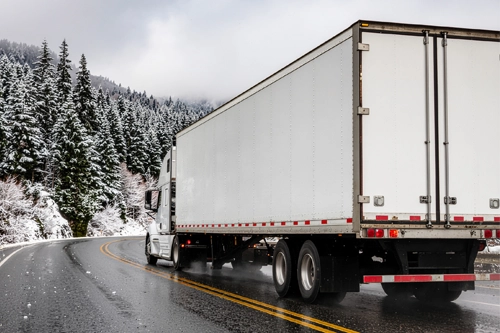
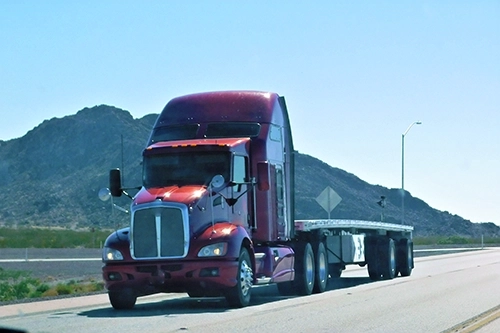
2. Running Light or with a Loaded Unbalanced Trailer
When running light or with an unbalanced trailer, you must limit engine braking because there isn’t enough weight to keep your tires glued to the road.
- Empty/Light Trailers: Without enough weight for grip, the engine brake can lock your drive tires, causing the trailer to slide sideways around your cab.
- Heavy/Unbalanced Trailers: A “tail-heavy” load acts like a pendulum that can whip out and pull your whole truck into a jackknife during a sudden stop.
3. Residential Areas and No-Jake-Brake Zones
The sound of a truck braking is loud, and many residential areas ban it. If you spot a sign reading “No Engine Braking,” “No Jake Brakes,” or “Unmuffled Engine Braking Prohibited,” know that the area is noise-sensitive. These signs apply to commercial vehicles, particularly large diesel and heavy-duty trucks.
4. Engines That Need Maintenance
If the truck engine brake isn’t properly maintained, it can act up when you need it the most. Don’t wait for something to go wrong. Schedule regular maintenance checks on your brakes and wheel-end components, including drive axle spindles, before small issues turn into bigger ones.
Key Takeaways for Truckers
Engine braking in trucks becomes second nature the more miles you put in and the more you cruise through steep grades. It takes a lot of pressure off your service brakes, protects your wheel-end components, prevents brake fade, and gives you steady control on your rig when driving long, steep grades.
Like any tool, engine brakes have their drawbacks. They can be loud enough to disrupt residents, which is why many areas prohibit their use.
On icy roads or when hauling a lighter load downhill, Jake brakes should be avoided as they increase the chances of the rear wheels locking up.
Remember, using engine braking is ideal for slowing down, not stopping the truck, so continue to use your service brake when you need a final stop. Lastly, keep your maintenance current, including your brake and suspension hardware, and engine braking will always work in your favor.
Is Engine Braking Illegal in the USA?
Engine braking is legal throughout the U.S., but specific “Jake Brake” restrictions apply to heavy trucks to control noise. According to a Connecticut OLR report, Delaware is the only state with a high-level ban on compression brakes except in emergencies. In other states like Colorado, using them without a proper muffler can result in a $500 fine. Most other rules are local, so just watch for “No Engine Braking” signs in residential areas or quiet zones.
Does Engine Braking in Trucks Harm the Engine?
No, busting the common myth: engine braking does not damage your truck’s engine. Engine braking is a built-in safety and efficiency feature. It protects your truck by preventing the service brakes from overheating and failing during long descents
The only exception is a poorly maintained system or using the brakes too aggressively. Extreme braking on icy roads or incorrect downshifting can put stress on the drivetrain, clutch, and transmission over time.
What’s the Best RPM for Engine Brake Performance in Trucks and Trailers?
For most rigs, keep your RPM (Revolutions Per Minute) between 1,500 and 2,200 for reliable engine brake performance. If you’re running a modern low-RPM engine, be ready to downshift. And regardless of RPM, skip the engine brake on icy roads and always warm up before engaging.
That said, always check your engine manual for the recommended range specific to your rig, as every engine is different.
Share