
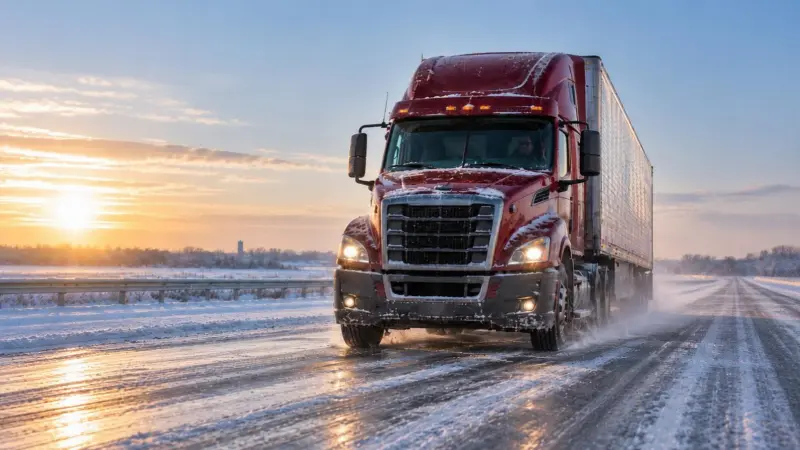
Cold weather can put extra stress on truck and trailer bearings. If you notice a hot metal smell, leaking lubricant, or moisture around the seal, the bearing may already be under winter stress.
In this article, we’ll explain why these failures happen, what warning signs to watch for, and how proper grease, seal checks, end-play inspection, and timely bearing or spindle repair can help prevent a roadside failure.
How Cold Weather Affects Wheel Bearings and What to Watch For
Cold weather changes how grease, metal, and seals behave inside a truck or trailer wheel end. These changes can increase friction, allow contamination, and put additional stress on bearings. Here are the main problems and the warning signs that can come with them.
Grease Gets Thicker
Cold temperatures make bearing grease thicker and harder to move. During the first few minutes of operation, the rollers may not receive enough lubrication, increasing friction and wear.
What you are likely to hear: Grinding or rough wheel-end noise during a cold start that becomes quieter as the truck warms up.
Bearing Clearances Can Change
Metal contracts as temperatures fall, shrinking the inner and outer dimensions by a few microns. If the fit becomes too tight, friction increases and the bearing may require more force to turn, especially during startup.
What you might see: Unusual wheel-end heat or a hot-metal smell after only a short drive.
Cold Weather Adds Stress to Worn Bearings
Extreme cold can add more stress to bearing components, particularly when a truck or trailer hits potholes, rough roads, or rail crossings. Worn or damaged bearings are more vulnerable.
What you may notice: New grinding, vibration, rough wheel rotation, or excessive wheel-end play.
Wheel Seals Can Become Stiff
Cold can make wheel seals less flexible. A worn or stiff seal may lose proper contact with the spindle, allowing water, road salt, and dirt into the hub.
What you may notice: Moisture around the hub or seal, lubricant leakage, corrosion, or signs of contamination during inspection.
If any of this sounds familiar, you can dig deeper into the signs of spindle failure, what each symptom usually means, and how urgent it is.
Warm-Weather Behavior vs. Cold-Weather Behavior
Seeing the two side by side makes it clear why the same bearing can run fine for months and then struggle the first week temperatures drop.
| Factor | Warm Weather (60°F+) | Cold Weather (below 32°F) |
| Grease viscosity | Flows freely, coats rollers evenly | Thickens, resists flow, starves contact points |
| Internal clearance | Runs at design spec | Tightens as spindle and bore contract at different rates |
| Seal flexibility | Pliable, maintains full contact with spindle | Stiffens, can crack or lose contact under flex |
| Startup friction | Low, bearing reaches operating temperature quickly | High, especially in the first few minutes before heat builds |
| Moisture risk | Lower, seal maintains full seal | Higher, condensation and road salt exploit any seal gap |
None of these factors act alone. A bearing with a slightly worn seal and grease that was already marginal for the climate can go from fine to seized in one hard cold snap, even though either issue alone might have been manageable.
How are Truck and Trailer Wheel Bearings Classified?
Bearings are generally classified by the type of load they handle:
- Radial: Supports the weight of the truck, trailer, and cargo.
- Axial (thrust): Handles side forces, such as those created during turns.
- Combined: Handles radial and axial loads at the same time.
Why are Tapered Roller Bearings Common in Heavy-Duty Wheel Ends?
Truck and trailer wheel ends commonly use tapered roller bearings because they can handle both radial and axial loads. Most serviceable heavy-duty hubs use inner and outer tapered roller bearings fitted around the spindle, allowing the hub and wheel to rotate smoothly under heavy loads.
How to Protect Your Truck From Bearing Failures in Winter
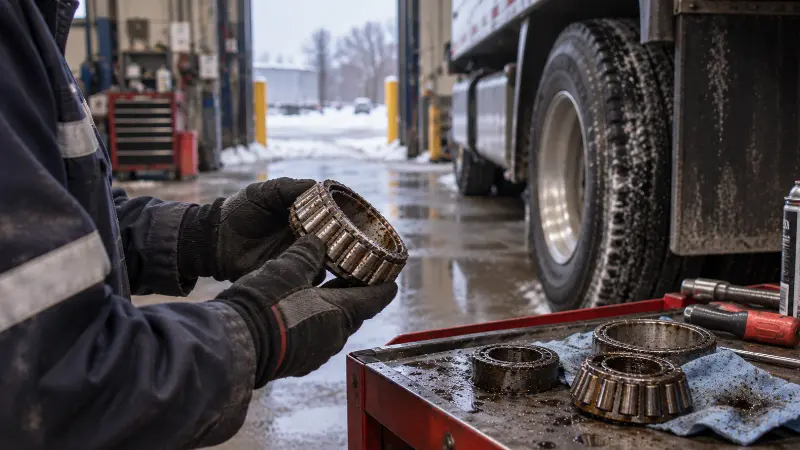
Cold weather, moisture, road salt, and changing lubricant performance can all make winter harder on wheel ends. A few additional checks can help catch problems before they damage the bearing or spindle.
| What to Inspect | Important Checks | Significance |
| Use the correct lubricant | Follow the wheel-end manufacturer’s lubricant and temperature specifications | Helps maintain proper lubrication in cold conditions |
| Check lubricant levels | Inspect oil levels and lubricant condition where the hub design allows | Low or contaminated lubricant can quickly damage bearings |
| Inspect wheel seals | Look for leaks, damage, or contamination around the seal and hub | Failed seals can let lubricant out and moisture in |
| Check wheel ends regularly | Look for leaks, unusual heat, noise, looseness, or rough rotation | Helps identify developing bearing problems early |
| Verify bearing adjustment | Check end play during wheel-end service according to the manufacturer’s procedure | Incorrect adjustment can shorten bearing life |
| Control salt and moisture | Keep wheel ends clean and inspect them for corrosion | Reduces winter contamination and corrosion |
1. Use the Right Lubricant
Don’t choose a lubricant based only on its NLGI grade. Use the lubricant specified for your particular wheel-end system and make sure its operating-temperature range suits the conditions your truck or trailer will encounter. Low-temperature performance matters because lubricant becomes more resistant to movement as temperatures fall.
2. Check Lubricant Level and Condition
For oil-lubricated hubs with sight windows, check the lubricant level during your pre-trip inspection and look for leakage or signs of contamination. Cloudy, discolored, unusually low, or contaminated lubricant deserves further inspection, not just topping off.
STEMCO recommends adding oil slowly through the hub cap’s side fill hole, allowing it time to flow into the hub cavity, and filling it to the full line on the clear hub-cap window.
3. Inspect Wheel Seals
Look around the wheel seal and hub cap for lubricant leakage or other signs of damage. A compromised seal can let lubricant escape and allow water, dirt, and road contaminants to enter, increasing the risk of corrosion and bearing damage.
4. Pay Extra Attention During Winter Inspections
During winter, watch for unusual wheel-end heat, grinding or rough rotation, lubricant leaks, contamination, and looseness. When the vehicle is properly supported during maintenance, technicians can also rotate the hub and check that it turns smoothly and quietly.
5. Verify Bearing End Play During Service
Whenever you service the wheel end, adjust the bearing according to the manufacturer’s procedure. For conventional Class 6–8 wheel ends covered by Timken, the target end play is 0.001–0.005 in. Other wheel-end systems may have different procedures, so always follow the applicable manufacturer’s specifications.
6. Keep Salt and Moisture Under Control
Road salt, slush, and moisture can contribute to corrosion and become especially damaging if they get past a compromised seal. Keep wheel ends reasonably clean during winter and inspect seals, hub caps, and surrounding components for corrosion, leaks, or damage.
Axle and wheel-end maintenance is necessary and should be performed every 12,000 miles or 1 year as a standard practice. Always consult your manufacturer’s manual instead of waiting.
Key Takeaways
- Cold weather thickens lubricant, increasing friction during cold starts.
- Stiff or worn seals can let water, road salt, and dirt contaminate the wheel end.
- Grinding, unusual hub heat, leaks, or excessive play can signal a developing bearing problem.
- Poor lubrication, contamination, or incorrect bearing adjustment can eventually lead to bearing seizure.
- A failed or overheated bearing can also score or damage the spindle, turning a bearing replacement into a larger wheel-end repair.
Frequently Asked Questions
Should you grease a spindle before installing a bearing?
Yes, you can apply a light, even coat of the same grease to the spindle’s bearing journal and shoulder before installing the bearing. This gives the bearing a proper start and prevents the rollers from running dry during the first moments of operation, before the bearing has had a chance to fully work the grease into every contact surface.
What causes a bearing to seize up?
The most common causes are grease starvation from extreme cold or a missed service interval; contamination from water or road salt getting past a damaged seal; a clearance that’s run too tight; or physical damage to the spindle’s bearing journal that prevents the bearing from seating and rotating correctly.
What are wheel bearings for?
Wheel bearings allow the wheel hub to rotate freely around the spindle while still supporting the full weight of the vehicle and the load it’s hauling. They’re what separates the spindle, a fixed, non-rotating shaft, from the hub and wheel, which need to spin freely under that same load.
How to clean a spindle so a bearing fits correctly?
Remove all old grease, rust, and debris from the bearing journal and shoulder with a clean rag and a non-abrasive solvent, then inspect the surface for scoring or pitting before installing a new bearing. Any grit or hardened grease left on the journal can misalign the bearing and cause premature wear, so the surface must be thoroughly clean, not just wiped down.
The Bottom Line
Cold weather does not usually cause bearing failure on its own, but it can worsen existing problems. Thickened lubricant, worn seals, contamination, and improper bearing adjustment can all become more serious as temperatures drop. Using the correct lubricant, inspecting wheel seals, monitoring wheel-end condition, and following the proper bearing adjustment procedure can help prevent unexpected winter failures.
If a failed bearing has already damaged the spindle, replacing the bearing alone may not solve the problem. Carefully inspect the spindle for wear, scoring, or heat damage, and replace it when necessary. Browse our truck and trailer spindles to find the right replacement, or contact our team for help identifying the right part.
Share